

PlantClimate Lab Represents Trinity at IPSAM 2025 in Galway
Planting Knowledge, Cultivating Insight - PlantClimate Lab at IPSAM
Our PlantClimate Lab had an outstanding presence at this year’s Irish Plant Scientists’ Association Meeting (IPSAM 2025) in Galway on 16–17 June. Across five talks and two posters, our team shared research spanning paleoenvironmental chemistry, epigenetic stress responses, ecosystem water balance, restoration ecology, and climate-focused tree monitoring.
Talks
-
Ailbhe Brazel presented “Understanding the role of histone methylation in plant hypoxia responses”, exploring how epigenetic mechanisms help plants adapt to low oxygen stress conditions.
-
Emma Blanka Kovács delivered “Mercury analyses of modern and fossil plant substrates as indicators of atmospheric Hg loading”, highlighting how modern and historical plant material can trace mercury pollution through time.
-
Sate Ahmad shared “On Weather, Water & Willows: Stomatal Response to Meteorological Forcings in Salix viminalis”, examining the effects of meteorological variability on plant water use and ecosystem balance.
-
Miriam Slodownik presented findings from the Witness Tree Project, which uses mature trees at Trinity Botanic Garden to monitor environmental change. Her talk focused on long-term tracking of physiological responses—such as stomatal conductance and particulate capture—to air pollution and climate stressors.
-
Christos Chondrogiannis gave an evolutionary perspective in his talk on the origins and evolution of CAM (Crassulacean Acid Metabolism) photosynthesis, using cycads as a model. His research contributes to understanding how ancient plant lineages adapted to arid environments, providing insight into the evolutionary drivers of water-use efficiency in plants.
Posters
-
Siddiq Muhammad presented “How Atmospheric Change Influences Elemental Composition in Woody Plants Across Global Biomes”, a global-scale study leveraging herbarium collections to assess how rising CO₂ and nitrogen deposition have shifted leaf nutrient profiles across biomes.
-
Sate Ahmad also presented “The Role of Landscape Ecology in Ecosystem Restoration”, outlining a multidisciplinary project that combines ecological data, spatial analysis, and long-term field monitoring to assess restoration outcomes across Irish landscapes.
It was a fantastic two days of science, collaboration, and connection. We’re incredibly proud of our team for representing PlantClimate Lab with such energy and excellence, and for contributing to important conversations on how plants respond to a changing planet.


TERRAFORM Researchers Present at IGRM2025
TERRAFORM Researchers Present at IGRM2025
The 68th Irish Geoscience Research Meeting (IGRM2025) was held at Trinity College Dublin from February 28th – March 2nd. The meeting included a session on palaeoclimate, at which several project TERRAFORM researchers showcased their current work and scientific advancements. Dr William J. Matthaeus presented his talk titled, Trait-Based Palaeo–Ecosystem Simulations Reveal Shifting Forest Cover Across the Triassic–Jurassic Biotic Crisis, highlighting the exciting potential of utilising plant fossil trait data in deep-time ecosystem modelling. PhD candidates Antonietta B. Knetge and Catarina Barbosa also presented talks on the Triassic–Jurassic Biotic Crisis. Knetge presented her study Palaeoecology and Diversity Loss During the End–Triassic Event at South Tancrediakløft, East Greenland, and Barbosa presented How Counting Method Influences the Interpretation of Plant Palaeoecological Data. Barbosa received an honorable mention for best student presentation. E. Blanka Kovács gave a talk on her research about secondary controls on the natural mercury cycle during large-scale volcanic events, titled Astronomical modulation of enhanced environmental mercury (Hg) fluxes during early Toarcian LIP volcanism. TERRAFORM members have benefited from engaging with Earth scientists from global and regional communities. IGRM is a critical venue for fostering collaborations in Ireland’s emerging geosciences community.
by Antonietta Knetge and Blanka Kovacs


Liffey Sensing - Art & Science Workshop
Art, Science, and the River - Siobhán McDonald’s Liffey Sensing Workshop
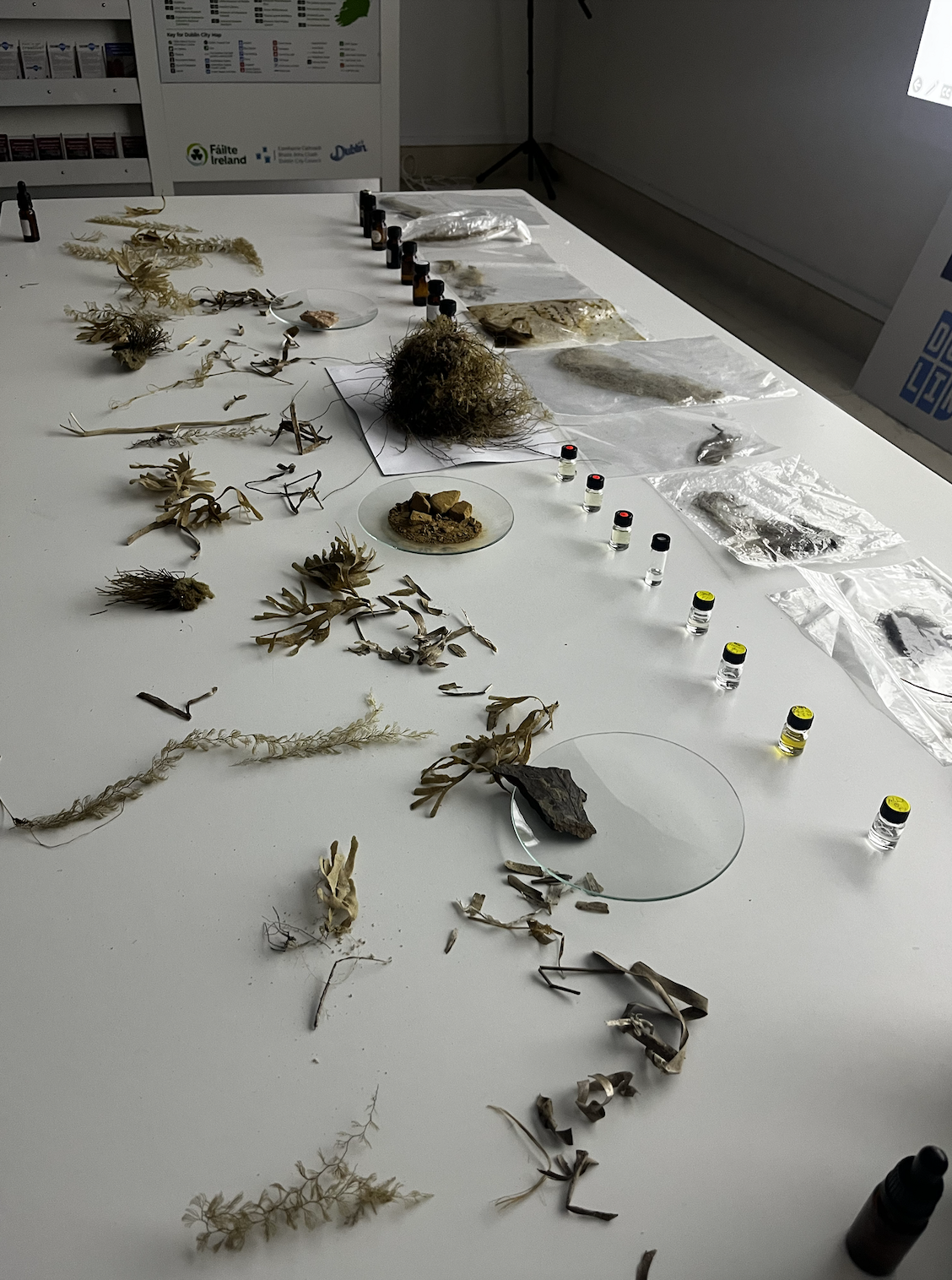
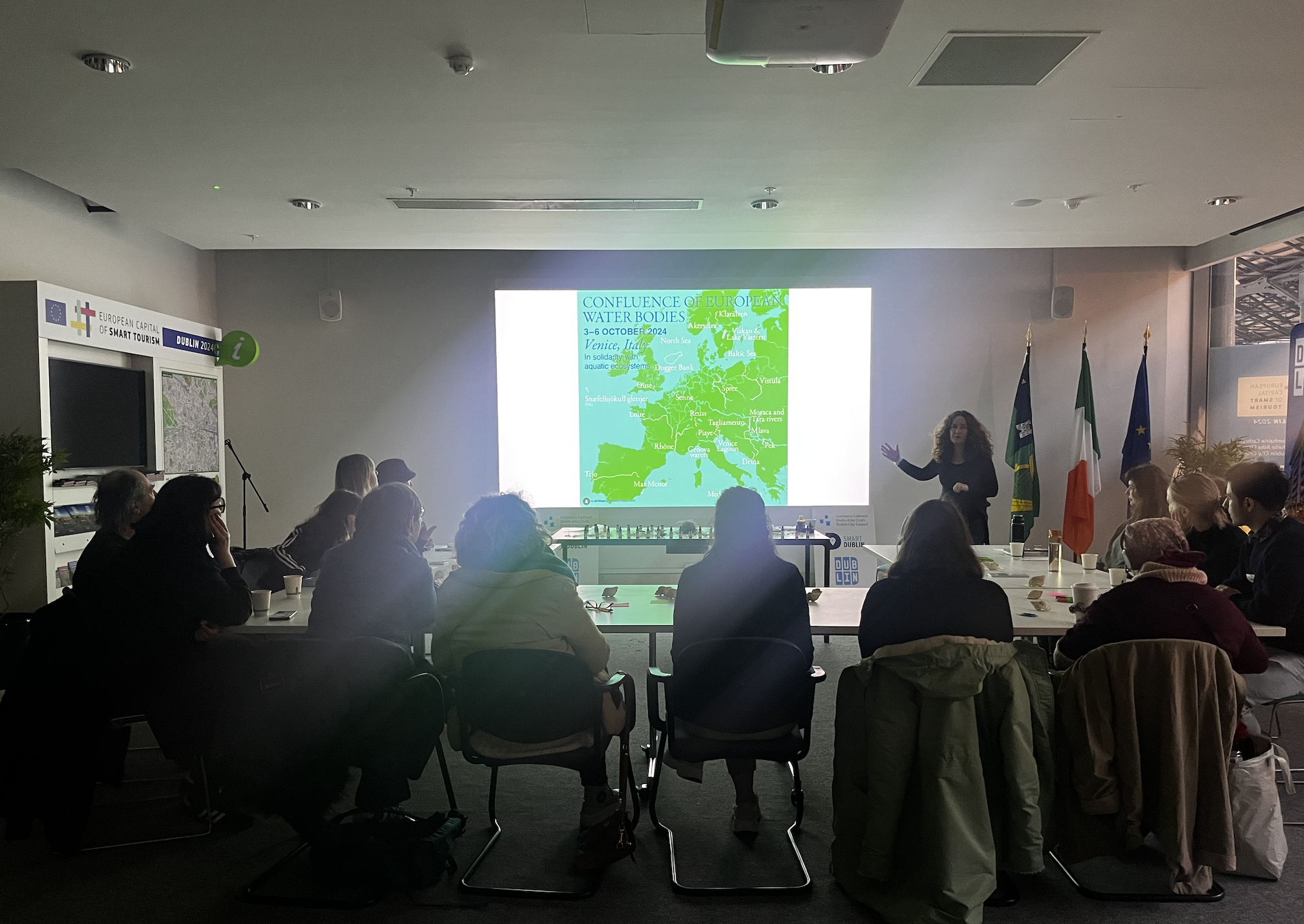
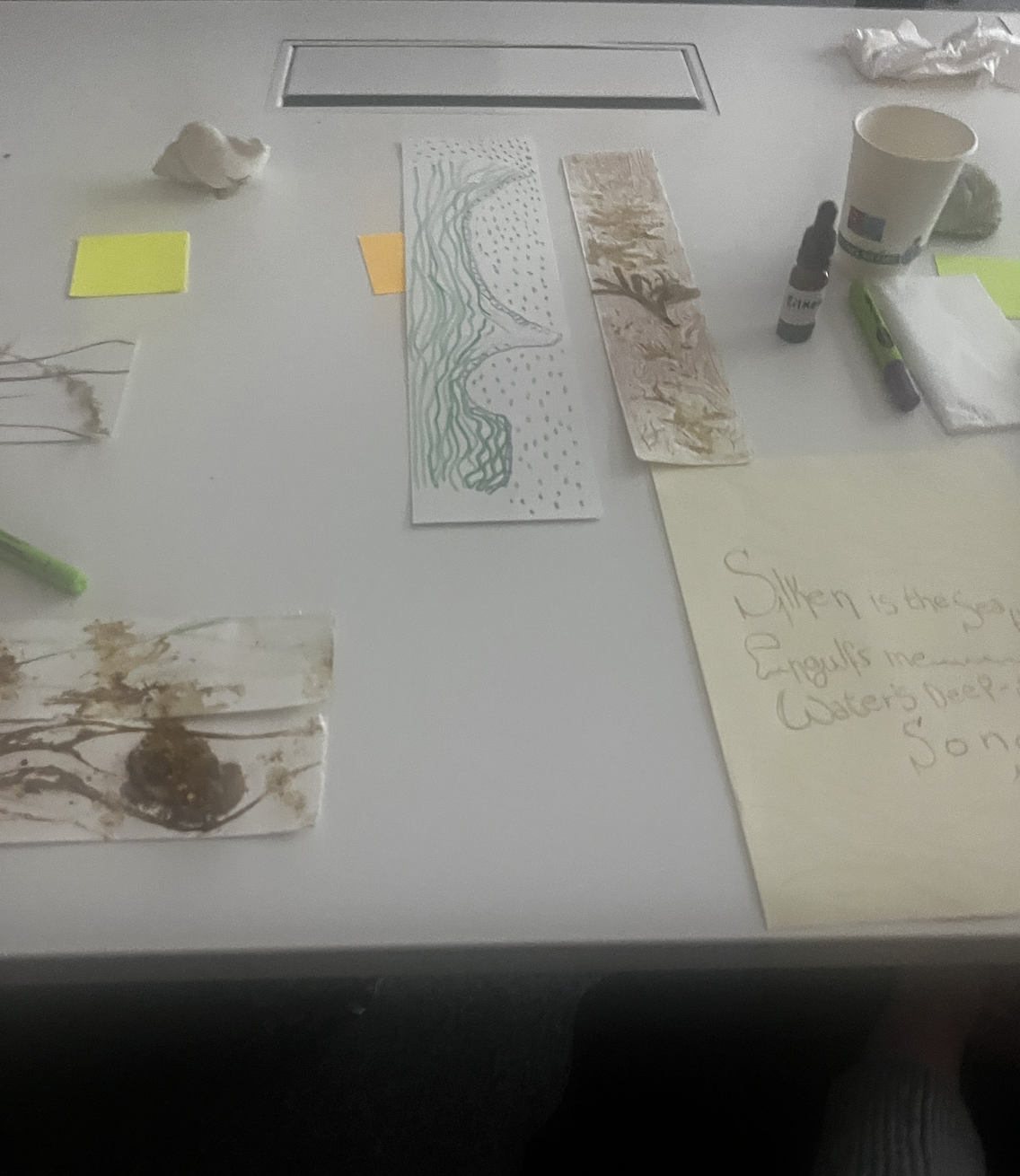
Project TERRAFORM’s artist-in-residence, Siobhán McDonald held a Liffey Sensing Workshop on February 18th to communicate her work with the European Union-funded STARTS4Water. McDonald is the STARTS4Water ambassador for Ireland, representing the river Liffey globally to contribute an artistic perspective to hydrologic science and technology in response to the drastic effects of climate change on our water systems. The Liffey Sensing workshop encouraged the attendees to artistically connect to the river Liffey and explore the river’s significance environmentally and socially. TERRAFORM PhD researcher Antonietta Knetge also attended and gave a brief presentation on the origins of the Liffey within the Wicklow mountains, the importance of the geology that supports the system, and Ireland’s rich geologic and fossil history. The attendees then created art inspired by the sounds and scents of the Liffey using marine herbarium specimens and local coastal sediment collected by McDonald. The photographs here illustrate the workshop and the incredible works by Artist Siobhán McDonald for the STARTS4Water project.
Project links:
https://starts.eu/starts4water-ii-residencies/
https://starts.eu/siobhan-mcdonald-shapeshifter/
by Antonietta Knetge

Cycads Bring us Together
Facilitating an exciting investigation into photosynthesis.
An exciting collaboration is underway between the Variable Light and Atmosphere (VAL) lab, Trinity College Botanic Gardens and the National Botanic Gardens of Ireland. The VAL lab has borrowed a variety of Cycads from both botanic gardens. The plants hail from all three extant Cycad families including Cycadaceae, Stangeriaceae, and Zamiaceae, capturing current diversity across the group.
Evolving around 280 million years ago, Cycads are an ancient group of gymnosperms. Often termed ‘living fossils’, these plants have existed since before the appearance of dinosaurs. Once dominating ancient ecosystems, todays Cycad species are limited to tropical and subtropical regions.
Borrowed Cycads have been acclimated to pre-set conditions within the state-of-the-art CONVIRON climate control chambers available at the VAL lab. Temperature, humidity and light spectra and intensity have been set to simulate the tropical environments in which today’s cycads reside.
Dr. Christos Chondrogiannis and Katie O’Dea from the ERC funded TERRAFORM project are studying photosynthetic characteristics of this unique group. The study aims to deeper understand the evolution of this iconic biological process which enables plants to synthesize energy from light.
The VAL lab would like to thank Trinity College Botanic Gardens and the National Botanic Gardens of Ireland for facilitating this research.


Siobhán McDonald captures landscapes at tipping points - The Boglands Are Breathing exhibition
'Siobhan McDonald communicate complex science in a visual way — reaching out to people with their heartstrings’
Siobhán’s latest exhibition – ‘The Boglands Are Breathing’ blends scientific and creative processes to make sculptures, videos, works on paper, paintings and sound pieces. The exhibition gathered numerous collaborators, bringing together scientists, conservators, musicians, philosophers, perfumers and celestial phenomena, all of whom collectively take part in the evolution of the work. Our shared boglands are positioned as the protagonists of an unseen drama, and this work makes visible the collective memory that is held in the rich repository that exists within the thin layer between the soil and the rocks. An installation entitled ‘A library of lost smells,’ consisting of plant species, gathered from numerous bog sites across Ireland acts as a slow distillation of deep time created from plants and mineral-rich bog waters, that explores links between smell & memory. The installation holds an assortment of hand-blown glass bottles containing scents from eight of the most important notes. Some of the vessels contain scent-infused remnants that were buried deep in a bog for over 20 years alluding to the low oxygen levels and unusual smells derived from the preservation conditions.
Find out more about Siobhán’s exhibition, which took place at Model Arts Centre in Sligo, from the Irish Times article.
Click below to see the short documentary on the exhibition.

