
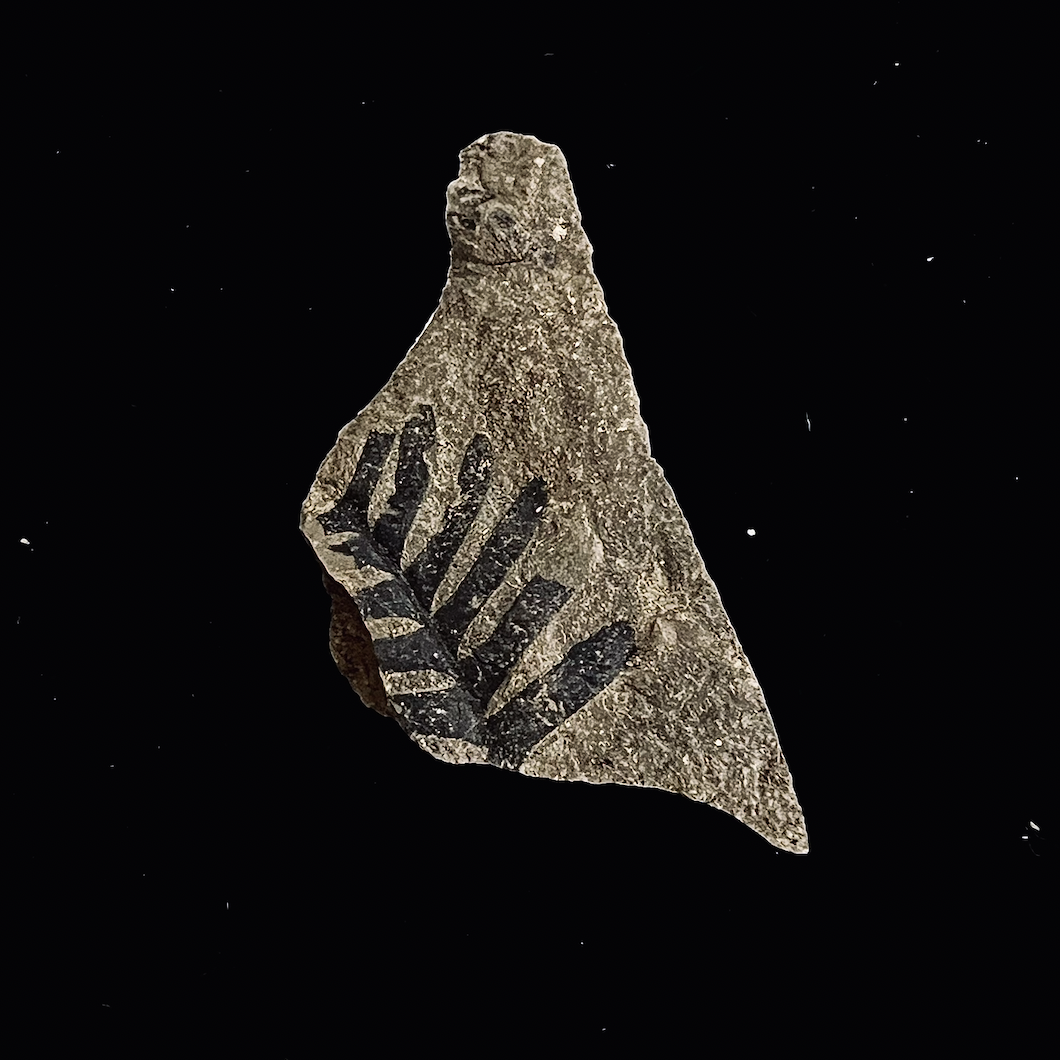
Greenland fossils uncover ancient climate crisis
Fossil plants reveal ecosystem change at the end-Triassic.
We are delighted to announce a new publication from our group:
“Census collection of two fossil plant localities in Jameson Land, East Greenland supports regional ecological turnover and diversity loss at the end-Triassic mass extinction.”
This research provides new insight into how ancient plant communities in East Greenland were affected during one of Earth’s most dramatic biodiversity crises – the end-Triassic mass extinction (~201 million years ago). By conducting detailed fossil census collections, our team was able to reconstruct changes in plant diversity and community structure across this critical interval. The results highlight significant ecological turnover and diversity loss, reflecting how global environmental stress reshaped ecosystems at the time. The study also demonstrates how fossil plant records can be used to track the ecological consequences of past climate crises, knowledge that is increasingly relevant as we seek to understand biodiversity responses to rapid environmental change today.
This paper marks an exciting milestone for Antonietta Knetge, PhD student in the Plant Climate Lab, who led the work as her first first-author publication. Congratulations, Antonietta!
We also acknowledge the excellent contributions of Catarina Barbosa and William Matthaeus through the ERC-funded Terraform project, as well as the leadership of Professor Jennifer McElwain. Our thanks go to all our collaborators who helped bring this study to fruition.
The paper is open access and available: https://www.sciencedirect.com/science/article/pii/S0031018225005516

Botanical Gardens - an underused resource to study climate change
Botanical Gardens - An underused resource to study climate change
A new paper with the participation of members of our team has been recently published and is accessible to all. Professor Jennifer McElwain, Dr Michelle Murray, Dr Christos Chondrogiannis and Midori Yajima (former member) are co-authors of the paper titled “A framework for long-term environmental monitoring using living plant collections in botanic gardens: A global review and case study from Trinity College Botanic Garden” published in the Plants People Planet journal.
Botanic gardens serve as ideal sites for investigating plant responses to climate change, offering substantial outreach and visitor engagement opportunities. However, the potential of living collections for multi-year studies has not been fully explored. This paper first reviews environmental monitoring projects conducted in these institutions over three continuous years, revealing that fewer than 1% of botanic gardens and arboreta globally engage in long-term research. Moreover, we identified a shortfall in biodiversity among the species used, with only 3% of angiosperm and 35% of gymnosperm families represented in studies.
Based on these findings, we propose a long-term (>30 years) monitoring project to study the effects of climate change, using the living collection of Trinity College Botanic Garden called Witness Tree Project. We have selected 21 tree specimens that are relevant to different interests, from highly studied species with excellent international trait data coverage to culturally important trees. We measured stomatal conductance, which is significantly influenced by atmospheric CO2 levels, as well as particulate matter, indicating atmospheric pollution.
We are excited to announce that the Witness Tree Project is now in its third year and is expanding. The same trees are also being monitored at the National Botanic Gardens of Ireland, with additional collaborations in progress. Furthermore, we are incorporating more measurements to provide a comprehensive understanding of how climate change impacts plants. Recognizing the importance of open science practices, we have made our data and documentation available to the public. This approach not only facilitates future global research but also promotes a collaborative atmosphere, which is crucial for addressing the colonial legacy of botanic gardens and herbaria.
by Christos Chondrogiannis


New publication!
Functional traits of fossil plants
Led by Prof. McElwain, the ERC-funded TERRAFORM project team recently published a comprehensive review “Functional Traits of Fossil Plants” in the New Phytologist. The review took a unique approach, evaluating which extant plant traits offer the greatest promise for application to fossils through contemporary trait-based ecology. The focus was placed on plant functional traits and measurable properties of fossils that provide insights into the functioning of the plants in past environments.
Taking into consideration the limitations of a trait-based approach in palaeobotany, the team together with collaborators assessed over 30 extant traits in palaeobotany and ranked 26 paleo-functional traits based on taphonomic and methodological criteria that can potentially impact Earth system processes. The Tansley Review offers a new perspective on the study of extinct plants and brings insights into their functioning in the past.
The open-access publication is available online under this link.


Figures from the publication:
Figure 1. The methodological framework used to critically evaluate 30 contemporary plant traits (from Pérez-Harguindeguy et al., 2013) for their potential application to the plant fossil record as paleo-functional traits.
Figure 2. Examples of fossil plant functional traits.
Figure 3. Comparison of paleo-functional trait scores according to different weighting criteria.

How to bring extinct plants ‘Back to Life' - publication by Will Matthaeus and Jenny McElwain
How to bring extinct plants ‘Back to Life.’
An obvious question to many might be “why study plant fossils?” Of course, some people just think they are amazing on their own. But there are ways that plant fossils can help us understand how Earth’s different systems work together. One framework for this approach is described by the recent review A Systems Approach to Understanding How Plants Transformed Earth’s Environment in Deep Time by TERRAFORM postdoc Will Matthaeus and PI Jenny McElwain among others. First, the plant fossil record tells us that at least part of Earth has been covered by plants since they evolved nearly half-a-billion years ago, even though the climate has been very different at times. The fossil record also shows that plants have changed so much since their start that at times they may have been nearly alien to our modern eyes. Finally, using ecosystem process models to incorporate measurements from plant fossils with climate simulations, we can estimate how extinct plants may have performed in the climates they experienced hundreds of millions of years in the past. Reaching so far back requires the expertise of several different kinds of scientists all working closely together to carefully develop solutions to a diverse array of challenges, and will allow us to understand the whole story of how the Earth we know came to be.